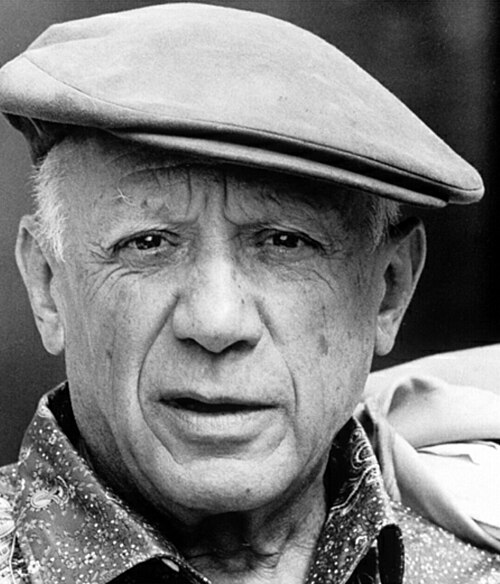
Ted Orland

Quick Facts
Introduction
Ted Orland (born 1941) is an American photographer, printmaker, longtime educator at Stanford University and Cabrillo College, and co-author alongside David Bayles of Art & Fear: Observations on the Perils (and Rewards) of Artmaking (1993), as well as Man & Yosemite and The View From The Studio Door (2006).
Starting his career inside Charles and Ray Eames's iconic design office before serving as full-time assistant and Yosemite Special Edition printmaker to Ansel Adams, Orland holds a celebrated place in modern creativity psychology for preserving the Ceramics Class Quantity-vs.-Quality Experiment—one of the most frequently cited parables proving iterative volume produces superior craft.
Early Life
Born in 1941 in the United States, Orland showed early visual curiosity combining mechanical engineering logic with playful visual curiosity—leading him into industrial design in Los Angeles before an epiphany in California's Sierra Nevada mountains redirected his entire artistic trajectory.
Education
Orland earned his Bachelor of Science in Industrial Design from the University of Southern California (USC) in 1963, working straight out of college for modernist design legends Charles and Ray Eames. An Ansel Adams Yosemite workshop in 1966 changed his life, and he later earned a Master of Arts in Art from San Francisco State University in 1975 while teaching alongside Adams.
Career & Contributions
Settling in Santa Cruz, California, Orland served fifteen seasons as instructor at the Ansel Adams Yosemite Workshops (and full-time printer of Adams's Yosemite Special Edition prints), taught digital and analog photography at Cabrillo College and Stanford University:
- The Ceramics Class Quantity vs. Quality Observation (1993): Recounted in Art & Fear (originally relayed by photographer Jerry Uelsmann at the University of Florida), a teacher split his class cleanly in two: the “Quantity Group” graded purely on total clay weight produced, and the “Quality Group” graded solely on perfecting one single pot. At semester's end, all the highest-quality, most expressive pots came exclusively from the Quantity Group—who learned mechanically from every wobble, crack, and firing mistake, while the Quality Group spent months theorizing perfection and produced lifeless clay.
- The View From The Studio Door (2006): Explored how working artists sustain decades-long experimentation without relying on museum trendiness.
- Historical Nuance: Orland himself notes candidly that the ceramics class observation originated from photographer-teacher Jerry Uelsmann's famous anecdotal university classroom exercise rather than a large double-blind lab study—making its concordance with Dean Keith Simonton's statistical Equal-Odds Rule across 15,000 real works all the more scientifically striking.
Collaborations & Intellectual Exchanges
David Bayles
Co-wrote Art & Fear (1993), pairing Bayles's poetic introspection with Orland's Santa Cruz studio pragmatism and teaching parables.
Ansel Adams & Jerry Uelsmann
Printed Ansel Adams's iconic Yosemite Special Editions while teaching 15 years at his workshops; adapted photographer/educator Jerry Uelsmann's ceramics grading parable into Art & Fear.
Dean Keith Simonton
Simonton's quantitative Equal-Odds Rule provides statistical proof across real composers and scientists for the identical quantity-births-quality law Orland observed in ceramics studios.
Major Achievements & Honors
- Co-authored Art & Fear (1993) and authored The View From The Studio Door (2006) and Man & Yosemite.
- Recipient of the Friends of Photography Ferguson Award and Distinguished Instructor honors across 15 seasons at Ansel Adams's workshops.
- Contributed early design work at the Office of Charles and Ray Eames and taught generations of students at Stanford University and Cabrillo College.
Legacy & Ongoing Influence
Living and photographing in Santa Cruz, California, Ted Orland remains an active teacher, fine-art printer, and author.
His preservation of the Quantity vs. Quality pottery experiment has become universal shorthand across software engineering sprints, startup MVPs, music production, and Peter Elbow's freewriting pedagogy—proving hands-on iteration always out-learns theoretical perfectionism.
Books by Ted Orland

Art & Fear
David Bayles & Ted Orland