Best Books for Students Who Can't Focus (Science-Backed Picks)
Many students mistake long study hours for productive learning. Sitting at a desk with an open book for six hours while constantly switching between your phone, lectures, and social feeds feels exhausting—but it delivers near-zero cognitive consolidation. True retention is a product of attentional depth, not clock time.
Science Petal Research Group
Empirical Curation on Attentional Mechanics & Focus
Vetted Blueprints to Quiet Your Mind & Master Concentration
- • Best for Digital Distraction: Deep Work — How to shield your brain from task-switching and build deep concentration.
- • Best for Tech Addiction: Stolen Focus — Reclaiming attention from the structural design of social media algorithms.
- • Best for Brain Overload: The Organized Mind — Methods to offload mental data and eliminate cognitive decision fatigue.
- • Best for Habit Automation: Atomic Habits — Designing frictionless study prompts to bypass willpower struggles.
- • Best for Brain Energy: Head Strong — Enhancing mitochondrial performance, sleep biology, and raw physical focus.
- • Best for Exam Anxiety: How to Be Enough — Quieting perfectionism and negative self-talk to clear working memory.
Why Students Can't Focus Anymore
Struggling to concentrate on a textbook is rarely a lack of personal willpower. In modern learning environments, concentration is actively sabotaged by structural, biological, and technological forces. When you attempt to read a chapter while keeping your smartphone face-up next to your notepad, you are fighting a losing battle against your brain's evolutionary programming.
Let’s examine the exact neurological mechanisms that compromise focus:
-
•
Attention Residue: Coined by researcher Sophie Leroy (2009) at the University of Minnesota, this concept describes the cognitive cost of task-switching. When you quickly glance at a text message or a social notification and then return to studying, your brain doesn't instantly shift back. A significant portion of your cognitive resources remains anchored to the previous context, severely shrinking your working memory capacity.
-
•
Hyperactive Notification Loops: Every ping, buzz, or red banner acts as an evolutionary hazard signal. The prefrontal cortex is forced to constantly exert executive control to suppress the impulse to check. This constant struggle rapidly drains your blood-glucose levels and induces cognitive fatigue.
-
•
Cognitive Overload: Swelling pools of study materials, search engines, and multiple browser tabs open simultaneously overwhelm the central executive network. The brain's bandwidth is consumed just cataloging where things are, leaving little energy for deep processing.
-
•
Poor Habit Cues & Friction: If your desk is surrounded by gaming controllers, snack wrappers, and high-stimulation prompts, your dopamine-driven reward pathways are constantly triggered. Studying, which requires effortful, delayed rewards, cannot compete with these immediate sensory gratifications.
A classic study published in Computers in Human Behavior (Mark, 2016) at the University of California, Irvine, tracked students during self-directed study. The researchers discovered that the average focus duration on any single screen or tab was only 40 seconds before shifting. This extreme hyper-fragmentation ruins memory consolidation and turns learning into superficial recognition.
To resolve this attention crisis, you must look beyond motivational quotes. You need a targeted, evidence-based manual designed to address your specific biological and mental friction points. Here are the 6 books that actually move the needle.
Vetted Literature on Attention Engineering
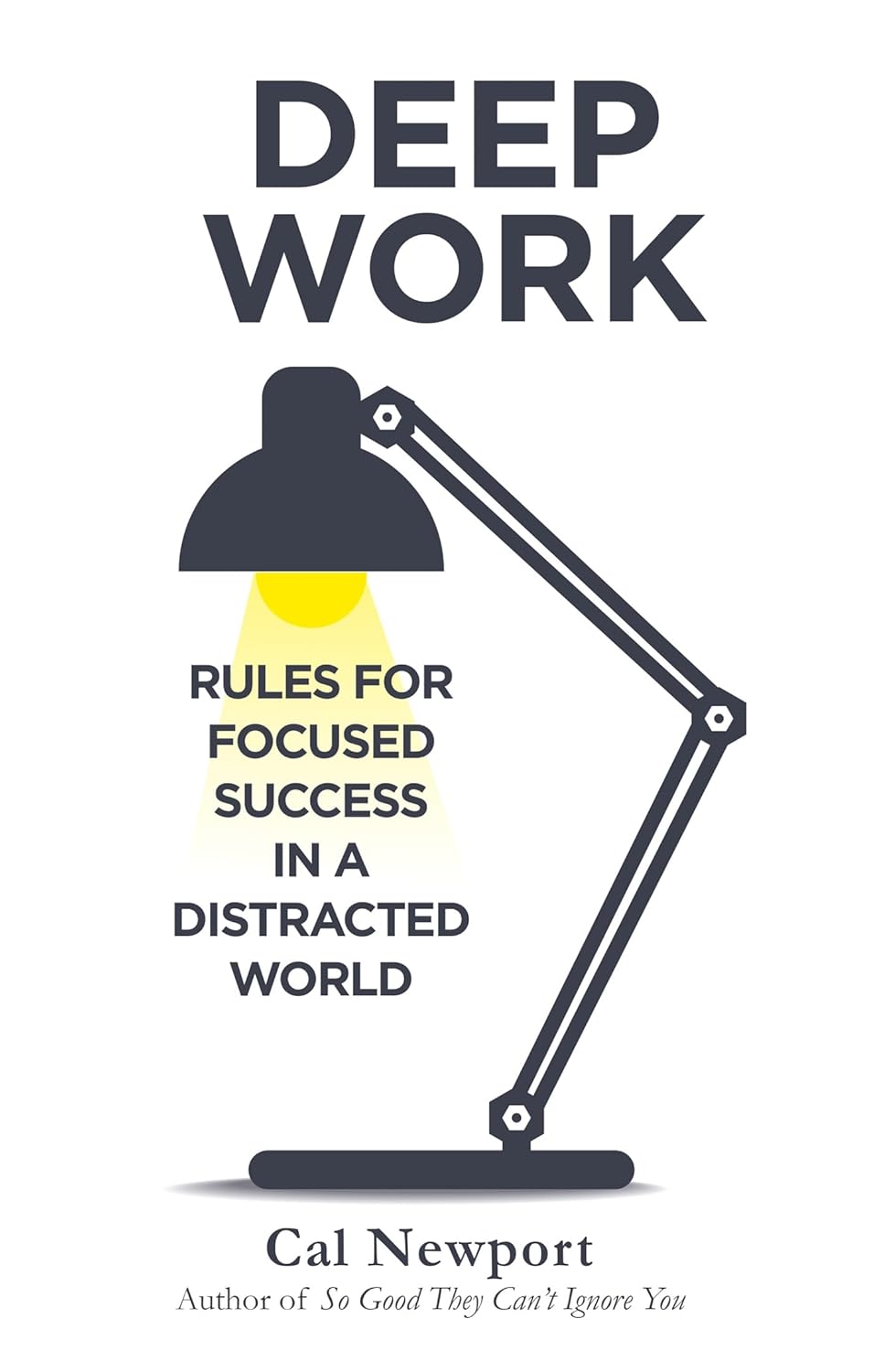
Deep Work
Cal Newport
Why This Book
Cal Newport, a computer science professor at Georgetown University, argues that deep focus is not a moral trait—it is a cognitive skill akin to physical stamina. In a world full of digital notifications, the ability to concentrate deeply is becoming increasingly rare and valuable. If you cannot focus for more than 15 minutes without reaching for your phone, this book is your technical recovery plan.
Main Scientific Idea
The book's scientific center is attention residue. Newport describes how myelin sheath development around neural networks accelerates only when those circuits are fired consistently without interruption. Each quick check of your notifications ruins this process, forcing you to start rebuilding focus from scratch.
Key Lessons
- Schedule your distractions: Instead of scheduling your focus sessions, block specific, limited windows for phone use and web browsing.
- Embrace boredom: Stop looking at your phone during every empty gap in your day; this trains your brain to crave constant stimulation.
- Quit low-value social media: Assess networks strictly by whether they actively contribute to your core learning goals.
Editorial Opinion
This is the absolute prerequisite for focused study. Newport doesn't just ask you to "try harder"—he provides a rigorous architectural design for your work environment to protect your brain from distraction.
Primary Target: Task Isolation
Impact Speed: Immediate
Primary Focus: Deep concentration
Students whose study sessions are constantly broken by social feeds or instant notifications.
Readers who already maintain a distraction-free physical workspace and strict device blocks.

Stolen Focus
Johann Hari
Why This Book
Johann Hari travelled the globe interviewing the world's leading scientists mapping the human attention span. He reveals that your focus wasn't lost; it was stolen. Tech companies spend billions intentionally designing interfaces that hook our primitive survival reflexes to capture our attention for advertisers.
Main Scientific Idea
Hari explains the systemic attention crisis, driven by technological over-stimulation, sleep deprivation, environmental toxins, and chronic stress. He uses interviews with Silicon Valley insiders to prove that infinite scroll and variable dopamine feedback are mathematically calibrated to break deep thought.
Key Lessons
- Reject individual guilt: Understand that attention is broken by design; blaming yourself prevents you from executing structural fixes.
- The magic of 'flow' states: Focus can only be restored if you replace toxic micro-distractions with long, single-task projects.
- Physical intervention: Use physical tools (like timed lockboxes for phones) to hard-boundary yourself from temptations.
Editorial Opinion
An essential diagnostic tool. Hari shifts the focus from simple study hacks to the broader, systemic environment, empowering students to build strong boundaries.
Primary Target: Digital Boundary Control
Impact Speed: 1 Week
Primary Focus: Modern attention crisis
Students who feel completely addicted to social media and experience anxiety when disconnected.
Students looking strictly for personal cognitive exercises or simple study techniques.

The Organized Mind
Daniel Levitin
Why This Book
Daniel Levitin, a neuroscientist, addresses the cognitive cost of the Information Age. Modern students process more raw information in a day than their ancestors did in a lifetime. This constant bombardment of data exhausts the prefrontal cortex, inducing brain fog and making high-level academic processing nearly impossible.
Main Scientific Idea
The core thesis is cognitive load theory and decision fatigue. The human brain's attentional filter can only handle a limited number of decisions per day. Levitin explains how offloading tasks to external systems (calendars, physical filing systems, note vaults) protects precious prefrontal energy for studying.
Key Lessons
- Externalize your memory: Write down ideas immediately to free working memory capacity.
- The rule of category-splitting: Keep distinct study subjects separated to prevent cognitive friction and cross-contamination.
- Batch low-level tasks: Answer emails, plan sessions, and clean your desk in a single, dedicated chunk to minimize decision fatigue.
Editorial Opinion
If you feel constantly overwhelmed, this book is an absolute lifesaver. Levitin translates complex neurobiology into highly practical organization blueprints.
Primary Target: Working Memory Freedom
Impact Speed: 3 Days
Primary Focus: Mental organization
Students struggling with information overload, disorganized schedules, and persistent forgetfulness.
Those seeking quick tips who are unwilling to modify their scheduling and organizational habits.

Atomic Habits
James Clear
Why This Book
Starting is the hardest part. If you spend hours thinking about studying but delay until deadline day, you are exhausting your prefrontal cortex with conflict. James Clear translates complex behavioral neuroscience into a simple formula: build systems that automate the starting line so focus becomes automatic.
Main Scientific Idea
The book is based on the four-step feedback loop: cue, craving, response, and reward. Clear shows that behaviors become habitual when we redesign our environmental architecture to make good cues obvious and immediate rewards satisfying, completely bypassing the need for willpower.
Key Lessons
- The 2-Minute Rule: Downscale any habit so it takes under two minutes to start (e.g., "open my chemistry book to page one").
- Habit Stacking: Anchor a new study habit immediately after an existing daily routine (e.g., "After I pour my coffee, I will open my planner").
- Visual Cue Optimization: Designate a single, dedicated desk purely for study, and keep game controllers hidden.
Editorial Opinion
A masterclass in environmental design. If you struggle to maintain focus simply because starting feels like a chore, James Clear provides the exact framework you need to automate success.
Primary Target: Task Initiation
Impact Speed: 2 Weeks
Primary Focus: Habit automaticity
Students who struggle to study consistently and rely on sudden bursts of panic or willpower.
High-discipline individuals looking solely for memory-retention drills or deep physiological biohacks.

Head Strong
Dave Asprey
Why This Book
Focus is fundamentally biological. Your brain is the most energy-intensive organ in your body, consuming 20% of your total resting energy. If your cellular mitochondria are underpowered, your focus will quickly collapse into brain fog. Dave Asprey shows how to optimize your physical environment, sleep biology, and nutrition to supply your brain with maximum energy.
Main Scientific Idea
The scientific foundation is mitochondrial efficiency and neuroinflammation. Asprey explains how blue light from screens suppresses melatonin secretion, disrupting deep restorative sleep. Additionally, inflammation from poor nutrition triggers cellular stress in the prefrontal cortex, leading to attentional deficits.
Key Lessons
- Block high-energy blue light: Use blue-blocking software or glasses in the evening to protect melatonin production.
- Cold thermogenesis: Exposure to cold water trigger mitochondrial biogenesis, immediately upgrading focus stamina.
- Anti-inflammatory fuel: Cut sugars and seed oils that cause inflammatory brain fog, replacing them with healthy brain fats.
Editorial Opinion
The best physiological biohacking manual. If you already practice focused study techniques but still struggle with physical exhaustion, Dave Asprey’s biological blueprints are essential.
Primary Target: Mitochondrial ATP Energy
Impact Speed: 10 Days
Primary Focus: Brain energy & fatigue
Students experiencing constant afternoon fatigue, brain fog, or persistent sleep issues.
Readers looking strictly for psychological motivation or basic, non-biological study methods.

How to Be Enough
Ellen Hendriksen
Why This Book
Anxiety is a quiet destroyer of focus. When you sit down to study and find your mind flooded with fears of failing, letting others down, or falling short of flawless achievements, your working memory is hijacked. Dr. Ellen Hendriksen shows how toxic perfectionism leads to task-avoidance, procrastination, and a complete inability to concentrate.
Main Scientific Idea
The core thesis centers on the amygdala’s response to psychological threat. Dr. Hendriksen explains that study anxiety and toxic perfectionism trigger the brain's defense mechanism, causing the body to treat studying like an active threat. This shuts down executive function in the prefrontal cortex, which is replaced by nervous avoidance.
Key Lessons
- Defang the inner critic: Reframe absolute demands (e.g., "I must get a perfect score") into realistic outcomes.
- The role of exposure: Rather than avoiding difficult chapters, tackle them in small, low-stakes micro-sessions.
- Action precedes confidence: Don't wait until you feel confident to start studying; start working first, and confidence will follow.
Editorial Opinion
A profoundly compassionate, science-backed manual. If your primary focus struggle stems from intense exam pressure, fear of failure, or overthinking, this book is an absolute prerequisite.
Primary Target: Anxiety Reduction
Impact Speed: 1 Week
Primary Focus: Perfectionism & avoidance
Students whose attention is broken by self-doubt, fear of failure, and overthinking.
Students seeking basic productivity metrics who do not struggle with performance anxiety or perfectionism.
The Focus Performance Matrix
To help you select the exact blueprint matching your current cognitive bottleneck, our editorial team created this quick-reference matrix:
| Book | Primary Focus | Best For | Skip If | Difficulty |
|---|---|---|---|---|
| Deep Work | Deep concentration | Distracted Students | Already have device locks | Medium |
| Stolen Focus | Modern attention crisis | Tech Addicts | Seeking only local exercises | Easy |
| The Organized Mind | Mental organization | Brain Overload | Want simple quick checklists | High |
| Atomic Habits | Habit automaticity | Procrastinators | Already have extreme discipline | Easy |
| Head Strong | Brain energy & fatigue | Physically Fatigued | Unwilling to shift biological fuel | High |
| How to Be Enough | Perfectionism & avoidance | Exam Anxiety | Don't struggle with self-doubt | Easy |
Which Book Should You Start With?
Do not attempt to read all 6 books at once—that is simply another form of productive procrastination. To get results immediately, diagnose your primary bottleneck and use this guide:
Start immediately with Deep Work to schedule digital blocks and protect your myelin sheath development.
Read Stolen Focus to understand the structural design of infinite scroll and establish firm phone barriers.
Read The Organized Mind to offload tasks to external memory and save precious prefrontal glucose.
Postpone theory and read Atomic Habits to build frictionless, obvious daily study cues.
Biological fuel is your issue. Start with Head Strong to optimize sleep, block blue light, and upgrade mitochondrial ATP.
Quiet perfectionism immediately with How to Be Enough to release hijacked prefrontal working memory.
The Scientific Selection Framework
Our selection group evaluates materials based strictly on empirical criteria rather than casual internet popularity. To ensure these books provide real, measurable concentration upgrades, we verified their consistency with core principles of cognitive psychology:
-
•
Reduction of Attention Residue: Vetted blueprints must teach methods to schedule task-switching intervals, which significantly reduces recovery time and prevents attention fragmentation.
-
•
Preservation of Executive Function: Recommended strategies must actively lower cognitive decision load, saving the prefrontal cortex from early-onset exhaustion.
-
•
Biological Energy Support: We evaluate books by whether they support mitochondrial ATP energy, cellular repair, and blue-light circadian alignment—which are vital to long-term memory consolidation.
-
•
Habit Loop Optimization: Behavioral systems must map directly onto established neural reward pathways, bypassing unreliable willpower struggles.
Frequently Asked Questions
• Can books actually improve concentration?
Yes. Books grounded in cognitive science do not just offer empty motivational advice; they provide systematic, empirical protocols to restructure your study environment, retrain your neural circuits, and manage physiological brain energy.
• Why do I lose focus after only a few minutes?
Frequent distractions are rarely a character flaw. They are caused by "attention residue"—the mental cost of switching tasks, such as checking a notification—and over-stimulated dopamine pathways that make low-stimulation activities like studying feel impossibly dull.
• Which book should students read first?
If your focus is constantly broken by your phone and notifications, start with Deep Work. If you struggle to start studying or stay consistent day-to-day, start with Atomic Habits. If you feel physically exhausted and suffer from brain fog, start with Head Strong.
• Can habits improve attention?
Absolutely. Attention relies heavily on prefrontal cortex control, which is easily fatigued. By automating the startup process through contextual cues and environment design, you bypass decision fatigue and protect executive function for actual learning.
• How long does it take to improve focus?
Physiological changes—such as reducing attention residue by keeping your phone in another room—yield immediate cognitive returns. Rewiring deep behavioral loops and building daily focus stamina typically requires two to four weeks of deliberate practice.