Best Books for Learning Faster (Without Studying Longer)
Most students study the wrong way. You sit at a desk for six hours. You highlight textbooks in bright yellow. You reread your notes until your eyes hurt. Then you take the test, or try to apply the skill at work. Your mind goes blank.
Science Petal Research Group
Empirical Curation on Human Cognitive Mechanics
The Best Books to Learn Faster at a Glance
- • Best overall: Make It Stick — The definitive scientific manual for memory retrieval and retention.
- • Best for beginners: Atomic Habits — Eliminates startup friction and builds daily study consistency.
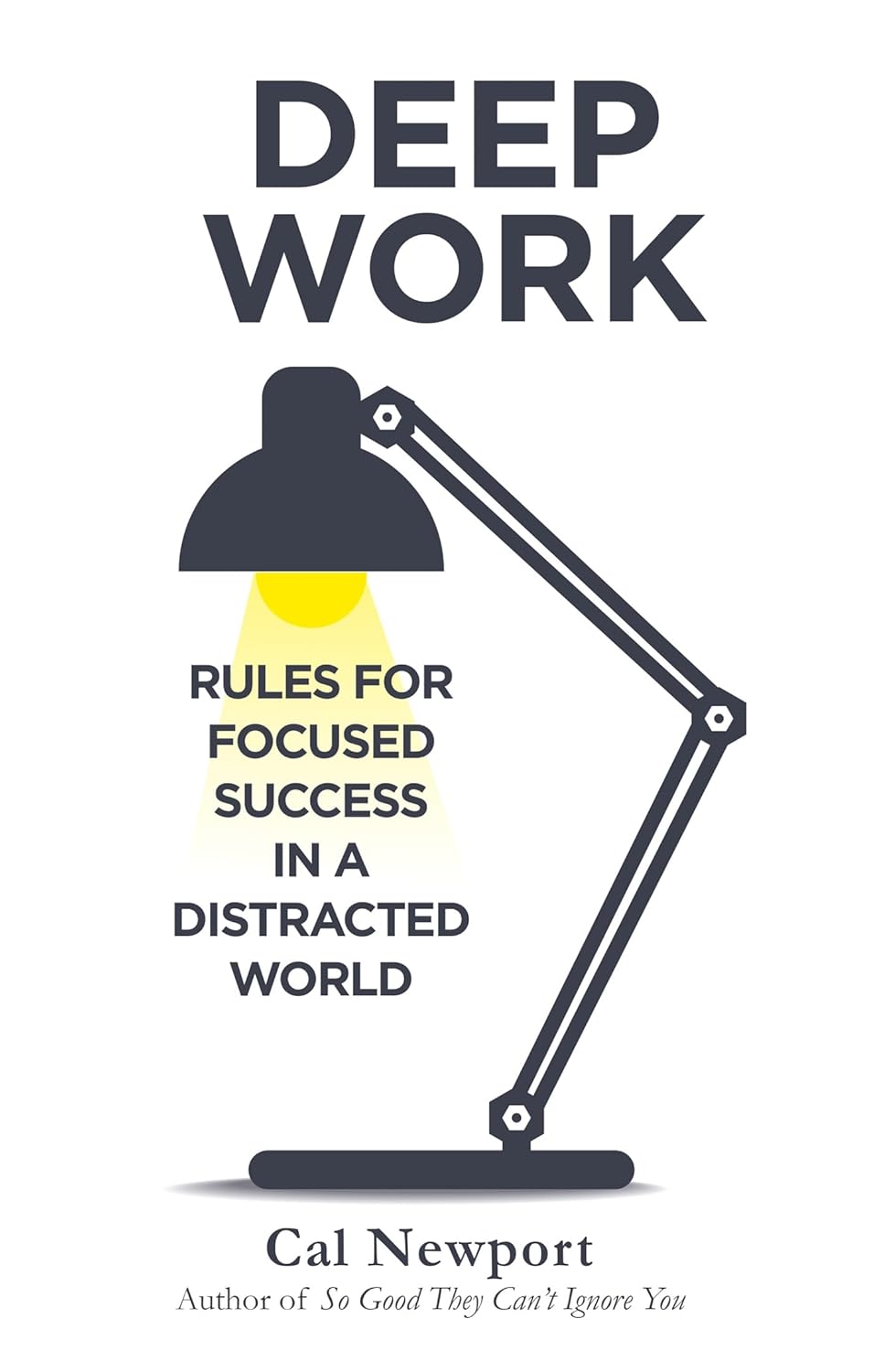
- • Best for focus: Deep Work — A rigorous training regimen to conquer cognitive distraction.
- • Best for memory: Make It Stick — Leverages active recall, spaced repetition, and interleaving.
- • Best value: Ultralearning — A self-directed framework to master complex professional skills fast.
The Illusion of Competence
Why does rereading fail so consistently? Because it creates the illusion of competence. When you read a page for the third time, your brain recognizes the words. It feels easy. You trick yourself into thinking fluency equals memory.
It does not. Recognition is not retrieval. When you sit down for an exam or face a real-world coding problem, the text is gone. If you never practiced pulling the information out of your brain from scratch, the neural pathway remains weak.
According to cognitive research published in the Journal of Experimental Psychology (Roediger & Karpicke, 2006), active recall testing produces significantly higher long-term retention than repeated study. When students are forced to retrieve answers from memory without looking at notes, neural pathways governing recall strengthen exponentially compared to passive rereading.
You need to eliminate the four hidden bottlenecks holding you back: fragmented focus, inconsistent habits, passive recognition, and slow skill decoding.
The 4 Books to Accelerate Learning
Why This Book
You cannot consolidate memory while your attention is fragmented. When you check your phone or email every fifteen minutes, you trigger cognitive residue. A portion of your attention stays stuck on the previous screen. This destroys your working memory capacity and guarantees slow learning.
Key Idea & Takeaway
Newport treats focus as a hard skill you must train. He provides strict rules to eliminate digital interruptions and build attentional depth. Two hours of uninterrupted deep study produces more permanent retention than six hours of semi-distracted reading.
Editorial Opinion
We rank this as the absolute prerequisite for any learning regimen. Most study advice assumes you can sit still and focus; Newport actually gives you the engineering protocol to train your neural circuits to resist distraction in an age of hyperactive notifications.
Primary Target: Cognitive Focus
Impact Speed: Immediate
Best For: Distracted Students
Students, engineers, and professionals who feel constantly busy but struggle to finish cognitively demanding projects.
Anyone looking for passive motivation or quick hacks without modifying their daily digital habits.

Atomic Habits
James Clear
Why This Book
Cramming before an exam is a biological failure. Your brain requires sleep and repeated exposure over time to build myelin sheathing around neural circuits. If you rely on sudden bursts of willpower, you will burn out and forget everything a week later.
Key Idea & Takeaway
Clear shows why intense all-night effort loses to small, daily systems. You learn how to design your environment so studying starts automatically. By lowering startup friction and building visual cues, you study consistently every day without fighting your willpower.
Editorial Opinion
This is the best behavioral manual for breaking procrastination loops. James Clear translates neurobiology into simple environmental adjustments that make studying effortless and automatic.
Primary Target: Daily Consistency
Impact Speed: 2 Weeks
Best For: Procrastinators
Procrastinators who wait for last-minute motivation or binge study before deadlines.
Advanced learners who already have ironclad daily discipline and need memory retrieval techniques instead.

Make It Stick
Brown, Roediger, McDaniel
Why This Book
This is the operating manual for modern learning science. Two cognitive researchers break down exactly why highlighting, summarizing, and repetitive reading fail to create permanent memory traces.
Key Idea & Takeaway
Replace passive review with active recall, spaced repetition, and interleaving. Read a chapter once, shut the book, and force yourself to write down or speak the core concepts from memory. This generation effect forces your neurons to wire together permanently.
Editorial Opinion
If you only read one book on learning mechanics, read this. It debunks popular myths like "learning styles" and provides empirical proof that effortful retrieval is the key to mastering any subject.
Primary Target: Memory Retrieval
Impact Speed: Immediate
Best For: Hard Workers
Hard workers and students who study for hours but freeze up or forget key concepts during exams.
Readers seeking light entertainment or casual self-help without scientific experimental data.

Ultralearning
Scott H. Young
Why This Book
Once you master basic focus and recall, you need an aggressive strategy for hard, complex domains. Whether you are tackling software engineering, a foreign language, or organic chemistry, traditional classroom pacing is too slow.
Key Idea & Takeaway
Young deconstructs how high performers learn complex skills in months instead of years. You learn how to build direct practice loops, isolate and drill your weakest edges, and use rapid feedback to correct errors before they become bad habits.
Editorial Opinion
Scott Young provides an inspiring, rigorous roadmap for autodidacts. We value his insistence on directness: practicing the actual target skill under real-world conditions rather than reading passive tutorials.
Primary Target: Skill Acceleration
Impact Speed: 1 Month
Best For: Self-Directed Learners
Ambitious career changers, self-taught programmers, and professionals needing to master complex domains fast.
Students looking for easy study shortcuts who are unwilling to commit to intense, structured self-directed practice.
Who Each Book Fits
Deep Work
Best for students who feel constantly busy but get nothing finished. If you study with twenty browser tabs open and your phone buzzing next to your keyboard, start here.
Atomic Habits
Best for procrastinators who wait for motivation to strike. If you binge-study for ten hours before an exam and then do zero work for three weeks, start here.
Make It Stick
Best for hard workers who feel frustrated by poor grades. If you read every chapter twice and make neat flashcards but still freeze up during tests, start here.
Ultralearning
Best for ambitious career changers and self-learners. If you are teaching yourself technical skills outside of a structured classroom and need maximum speed, start here.
Decision Section: Where Should You Start?
Do not attempt to read all four books at once. That is just another form of procrastination. To get results immediately, use this selection guide:
You study for hours but freeze up during exams or forget technical definitions. Start immediately with Make It Stick to implement retrieval practice.
You are looking for quick motivational quotes without putting in effortful self-testing. Active retrieval requires embracing "desirable difficulty."
Students and professionals whose primary failure point is digital distraction. If you reach for your phone within 10 minutes of studying, read Deep Work.
If you struggle to even start studying until deadline day, postpone technical study books and read Atomic Habits to fix startup friction first.
How we selected these books
To ensure our recommendations deliver measurable cognitive gains, our editorial team evaluated literature across five strict empirical criteria:
-
•
Research quality: Every book must be grounded in peer-reviewed cognitive psychology, neurobiology, or rigorous experimental data rather than anecdotal opinion.
-
•
Author expertise: We prioritize credentialed researchers, professors, and domain practitioners who have spent decades analyzing memory and human performance.
-
•
Practical usefulness: The book must provide actionable, step-by-step protocols (such as spaced repetition tables or focus time-blocks) that readers can execute immediately.
-
•
Long-term relevance: We reject temporary productivity hacks or trendy software tools in favor of timeless principles of human neural architecture.
-
•
Independent editorial review: Our selections are entirely objective. We accept zero sponsored placements, paid inclusions, or publisher promotions.
Why did we include Deep Work?
Many readers ask why a book about workplace focus is on a study list. Here is the reality: attention is the prerequisite for memory. You can know every active recall trick in the world, but if you practice while switching back and forth to group chats, your working memory will fail to encode the data. Deep focus is the engine of learning speed.
Why not recommend more books?
Reading twenty books about learning is procrastination disguised as productivity. You do not need more theory. You need to fix your specific biological friction point. Once you solve attention, habits, recall, and speed, additional books yield diminishing returns. Stop reading about studying and start executing.
What do most book lists get wrong?
Most online lists recommend generic motivational biographies or outdated speed-reading manuals. Speed-reading is largely a myth that trades comprehension for rapid eye movement. True learning speed comes from high-density memory encoding and rapid retrieval, not skimming pages faster.
Frequently Asked Questions
• Is highlighting textbooks a waste of time?
Yes. Highlighting is a passive activity that demands almost zero cognitive effort from your brain. It feels productive, but it does not build memory. Replace highlighting with writing short summary questions in the page margins.
• How do I apply active recall immediately?
Read a single page or section. Close the book completely. Take a blank sheet of paper and write down the core concepts from memory without looking. Open the book and check what you missed. Repeat this daily.
• Can I listen to audiobooks to learn faster?
For light concepts or biographies, yes. For dense technical material, coding, or mathematics, audiobooks fail. You need visual engagement and the ability to pause, calculate, and test yourself on paper.
• How long does it take to see results?
You will notice a massive jump in memory retention the very first day you switch from rereading to active self-testing. Building automatic focus habits takes roughly two to four weeks of daily practice.