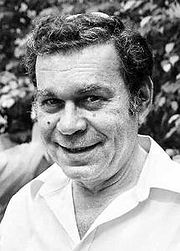
Atul Gawande

Quick Facts
Introduction
Atul A. Gawande, MD, MPH (born November 5, 1965), is an American general and endocrine surgeon, Professor at Harvard Medical School and the Harvard T.H. Chan School of Public Health, former Assistant Administrator for Global Health at USAID, and longtime New Yorker staff writer.
Through his bestselling books Complications (2002), The Checklist Manifesto (2009), and Being Mortal (2014)—alongside leading the World Health Organization's Safe Surgery Saves Lives initiative—Gawande examined why smart, well-trained professionals still make avoidable errors under complexity, and how simple pause-point protocols can save lives.
Early Life
Born in Brooklyn, New York, to Indian immigrant physicians Atmaram (a urologist) and Sushila Gawande (a pediatrician), Atul grew up in Athens, Ohio. Seeing rural medicine practiced up close—and later volunteering on political health-policy campaigns—gave him a dual perspective on frontline clinical care and systemic hospital design.
Education
Gawande graduated from Stanford University (1987) with dual bachelor's degrees in Biology and Political Science, earned a Rhodes Scholarship to Balliol College, Oxford (MA in PPE, 1989), completed his MD at Harvard Medical School (1995), and earned an MPH from the Harvard School of Public Health (1999).
Career & Contributions
Practicing general and endocrine surgery at Brigham and Women's Hospital in Boston, founding health-systems center Ariadne Labs and surgical-safety nonprofit Lifebox, and directing global health at USAID (2022–2025), Gawande shaped modern systems medicine:
- Ignorance vs. Ineptitude & Surgical Checklists (The Checklist Manifesto, 2009): Distinguished failures caused by lack of knowledge (ignorance) from failures caused by missing known steps under stress (ineptitude). Borrowing DO-CONFIRM pause-point habits from Boeing test pilot Daniel Boorman, Gawande and the WHO surgical team demonstrated sharp drops in surgical complications across eight diverse hospitals globally.
- Coaching for Experts: In his noted New Yorker essay "Personal Best," argued that even seasoned surgeons plateau without external observation and structured peer coaching—similar to Olympic athletes or concert musicians.
- Aging, Autonomy, & Mortal Limits (Being Mortal, 2014): Documented how modern medicine often prioritizes extending biological survival metrics at the cost of patient dignity, urging clinicians to ask patients what trade-offs make life meaningful.
- Implementation Nuance: Later hospital evaluations (such as Urbach et al., 2014 in Ontario) found minimal mortality drop where hospitals imposed surgical checklists purely as mandated paperwork—confirming Gawande's point that checklists work only when backed by genuine team communication and vocal safety culture.
Collaborations & Intellectual Exchanges
Daniel Boorman & Peter Pronovost
Boeing engineer Daniel Boorman advised Gawande on concise 5-to-9 item DO-CONFIRM checklist ergonomics, building alongside Johns Hopkins ICU safety pioneer Peter Pronovost.
Major Achievements & Honors
- Awarded a MacArthur 'Genius' Fellowship (2006) and two National Magazine Awards.
- Led the WHO Safe Surgery Saves Lives pilot study published in The New England Journal of Medicine (2009).
- Authored Complications (2002), The Checklist Manifesto (2009), and Being Mortal (2014, National Book Award finalist).
Legacy & Ongoing Influence
Gawande continues working across public health systems, surgical safety innovation, and medical journalism from Boston.
Books by Atul Gawande

The Checklist Manifesto
Atul Gawande