
What I Learned Losing a Million Dollars
A Candid Post-Mortem of Market Failure and Ego
Jim Paul dissects his own hubristic downfall on the Chicago Mercantile Exchange, exposing the psychology of catastrophic financial denial.
As an Amazon Associate, Science Petal earns from qualifying purchases made through links at no additional cost to you.
About the Book
A brutally honest post-mortem of a catastrophic commodity trading loss that reveals the cognitive traps behind financial failure.
Making money in markets involves hundreds of different strategies, but losing money always stems from the exact same psychological trap: confusing your ego with your position.
Key ideas
- Define the Exit Before Entry: Decide your stop-loss and invalidation point before entering any trade or investment, while your mind is still objective.
- Never Average Down on a Loser: Adding capital to a declining position is almost always ego trying to prove the market wrong rather than sound strategy.
- Don't Internalize Market Fluctuations: Taking a loss means you were wrong about a trade, not that you are an incompetent human being.
Why You'll Love This Book
- Paul lost $1.6 million and his career in soybean futures; he systematically reconstructs how emotional attachment, hope, and pride turn manageable setbacks into total ruin.
- Presents structured arguments and concrete examples without unnecessary academic jargon.
- Examines ego in financial decisions, the psychology of sunk costs, and pre-determined risk limits through concrete cases and practical examples.
- Gives readers a clear vocabulary and reference points they can revisit in everyday work.
Problem Solved
What I Learned Losing a Million Dollars prevents the emotional errors that wipe out investors:
- Confusing Early Luck with Genius: Demonstrates how early speculative windfalls lead to disastrous overconfidence.
- Moving Stop-Loss Limits: Explains why rationalizing losses in hope of a rebound guarantees catastrophic drawdown.
- Paralyzing Financial Shame: Helps operators take decisive losses unemotionally and protect remaining capital.
Final Verdict
A cult classic in finance and risk management that teaches you how not to lose everything before learning how to win.
“Personalizing losses—equating your net worth with your self-worth—is what turns a bad trade into an existential disaster.”
Compare Before You Decide

What I Learned Losing a Million Dollars vs Thinking in Bets
What I Learned Losing a Million Dollars by Jim Paul & Brendan Moynihan focuses on ego in financial decisions (224 pages (~4.5h read)), whereas Thinking in Bets by Annie Duke examines probabilistic thinking (288 pages (~5.5h read)).
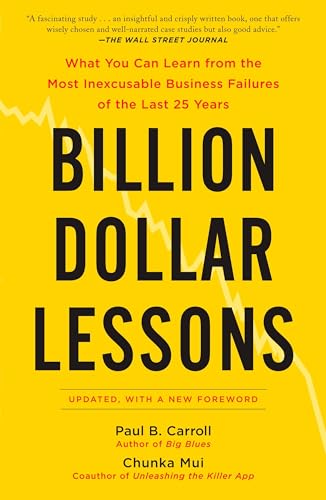
What I Learned Losing a Million Dollars vs Billion Dollar Lessons
What I Learned Losing a Million Dollars by Jim Paul & Brendan Moynihan focuses on ego in financial decisions (224 pages (~4.5h read)), whereas Billion Dollar Lessons by Paul B. Carroll & Chunka Mui examines the seven fatal strategies (320 pages (~6.4h read)).


