Why Your Brain Lies to You Every Morning (And How to Stop Listening)
The cognitive biases running your professional decisions, why intelligence makes it worse, and the science of thinking more clearly


The Executive Trap & The Columbia Study
In 2013, researchers at Columbia Business School set up a fascinating trap. They gathered 100 highly experienced professionals - managers, executives, and consultants - and handed them a series of 20 realistic business decisions to evaluate. The setup was straightforward: participants were given full, relevant information about scenarios ranging from hiring to high-level strategy and investments, all resting squarely within their fields of expertise.
Then, the researchers revealed the catch. Each scenario contained one clearly embedded cognitive bias. These weren't subtle tricks. They were deliberately obvious to anyone who knew what to look for.
The results were entirely alarming. These highly trained participants detected only 28% of the biases, missing a staggering 72% entirely. Worse, of the biases they actually managed to notice, they acted on 61% of them anyway. The translation is brutal: trained professionals missed the vast majority of obvious cognitive flaws in their own decision-making, and mere detection did absolutely nothing to stop the bias from taking hold.
But the most striking finding flipped a core corporate assumption on its head. Higher seniority correlated with more bias, not less. Junior professionals missed 68% of the traps, while senior professionals with a decade or more of experience missed 79%. Why were the veterans performing worse? Because more experience breeds more confidence. That confidence leads to less scrutiny of one's own thinking, which allows biases to operate completely unchecked. Experience doesn't reduce bias; it just buries it deeper beneath a veneer of unearned certainty.
A follow-up study from Harvard Medical School analyzing doctors making diagnostic decisions proved how structural changes can combat this:
- Under condition A, where doctors made diagnoses under time pressure, the correct diagnosis rate sat at a dismal 57%. Cognitive shortcuts and bias interference were remarkably high.
- Under condition B, the exact same doctors evaluated the exact same cases, but were forced to use a structured diagnostic checklist. Their accuracy skyrocketed to 84%, while cognitive shortcuts plummeted. A single structural change yielded a 27-point improvement in accuracy.
This is not just academic trivia; it is a professional crisis. Analysts at the McKinsey Global Institute reviewed 1,048 business decisions and found that identifiable cognitive biases tainted 58% of strategic planning, 74% of hiring decisions, 61% of investments, 67% of innovation attempts, and a massive 82% of performance evaluations. The financial impact is staggering. Companies operating with formal bias mitigation processes saw a 7% higher return on investment than the industry average, a 31% lower decision reversal rate, and 40% better strategic plan accuracy. Meanwhile, companies lacking these guardrails suffered an estimated $250 million in avoidable annual losses due to biased decision-making.
The uncomfortable reality is that your brain is not a neutral processor of information. It is a prediction machine built for survival, not accuracy. Every morning you wake up, automatic mental shortcuts activate long before your conscious thought process even boots up. These intuitive leaps kept our ancestors alive on the savannah, but they consistently fail in modern professional environments where variables are complex, stakes are immense, and the right answer is rarely the one that feels emotionally satisfying.
To explore the foundational science behind these everyday delusions, I highly recommend reading “You Are Not So Smart” by David McRaney and “The Art of Thinking Clearly” by Rolf Dobelli.

You Are Not So Smart
David McRaney

The Art of Thinking Clearly
Rolf Dobelli
The Biases Running Your Professional Life
1: Confirmation Bias - You Only See What You Already Believe

A seminal 1998 review by Raymond Nickerson in the Review of General Psychology cemented confirmation bias as the single most pervasive and damaging cognitive flaw in professional environments. At its core, it is the tendency to search for, interpret, favor, and recall information in a way that rigidly confirms your pre-existing beliefs.
Consider your morning email routine. You almost certainly unconsciously open messages from people who agree with you first. You dismissively skim over data that contradicts your current strategy, yet immediately forward articles that support your existing views, quietly archiving the ones that challenge them. In meetings, you easily remember contributions from allies and forget the points made by detractors. You recall facts that support your position with crystal clarity, while contradictory facts remain incredibly hazy.
In hiring, it is notoriously rampant. Interviewers often form a rigid opinion of a candidate in the first 90 seconds, then spend the remaining 45 minutes of the interview looking exclusively for evidence to confirm that snap judgment. During the debrief, they effortlessly recall all confirming evidence while the disconfirming signals vanish from memory.
The sheer power of this was quantified in a University of Texas study where participants were given ambiguous evidence regarding a topic they already held beliefs about. When asked to recall the information later, they remembered 81% of the evidence that supported their prior belief, but only 47% of the evidence that contradicted it. It was the exact same information, filtered entirely by the brain’s desire to be right. Professionally, this results in failing strategies being aggressively defended with cherry-picked data. The strategy itself might not be bad, but the executive’s information processing is completely broken.
2: The Dunning-Kruger Effect - The Less You Know, The More Confident You Are


First identified in a brilliant 1999 study published in the Journal of Personality and Social Psychology by David Dunning and Justin Kruger, this bias highlights a terrifying professional paradox.
In their original experiment, participants were tested on grammar, humor, and logical reasoning, and then asked to estimate their own performance relative to others. The bottom quartile performers - those who actually scored in the bottom 12% - estimated their performance to be in the top 38%, overestimating their ability by a massive 26 percentage points. Conversely, the top quartile performers, who actually scored in the top 12%, underestimated their rank, placing themselves in the top 30% (an 18-point underestimation).
This creates a double curse. Incompetent people lack the very skill needed to recognize their own incompetence. To realize your reasoning is flawed requires good reasoning ability, which is exactly the deficit causing the problem.
In the workplace, you see this in the confident new manager with a mere six months of experience operating at a 9/10 certainty level. They have almost no visible unknown unknowns and confidently declare, “I understand this business.” Compare them to the veteran executive with 20 years of experience operating at a 6/10 certainty level. The veteran sees countless unknown unknowns and realizes, “The more I learn, the more I realize I don’t know.” The true danger zone for any career is years one and two, where confidence peaks while competence bottoms out. This is when the most catastrophic professional decisions are made: when people are absolutely certain, and absolutely wrong.
3: Anchoring Bias - The First Number Owns You


If you think you are immune to random suggestions, look at the 1974 Science journal research by Amos Tversky and Daniel Kahneman. They asked participants to spin a wheel rigged to land on either 10 or 65. After the spin, participants were asked: “Is the percentage of African countries in the UN higher or lower than this number? What is your estimate?”
When the wheel landed on 10, the average estimate was 25%. When it landed on 65, the average estimate rocketed to 45%. An explicitly random number generated by a spinning wheel shifted professional estimates by 20 percentage points. The participants knew it was random, yet it still anchored their cognition.
Professionally, this dictates salary negotiations and budget approvals. If an employer opens a negotiation at $80,000, the anchor is set. The candidate negotiates from that point, perhaps settling at $87,000 and feeling victorious. If the candidate had spoken first and set the anchor at $105,000, the entire psychological center of gravity would have shifted, leading to a vastly different outcome. Whoever speaks first in a negotiation sets the anchor, and that anchor inevitably shapes the final reality.
The same applies to annual budgets. If Year 1 required a $500,000 budget, the Year 2 conversation usually starts with, “Should we increase or decrease from last year?” The $500,000 anchor dictates the framing. The question that should actually be asked is, “What does this function actually require to achieve its objectives?” Anchoring to the ghosts of prior budgets is exactly how organizational inefficiencies quietly compound over decades.
4: The Halo Effect - One Good Thing Makes Everything Good

Through the work of researchers like Phil Rosenzweig and Solomon Asch, we understand that one positive quality in a person or organization routinely causes us to automatically assume other positive qualities exist, regardless of the evidence.
In Solomon Asch’s original experiment, two groups evaluated a fictional person described with identical traits, except for a single word. Group A’s list ended with the word “warm”, while Group B’s list ended with “cold”. That one word dramatically altered the perception of every other trait on the list.
In business, the halo effect heavily distorts reality. If a hiring candidate attended a prestigious university like Harvard or Stanford, the halo activates, and interviewers assume their intelligence, character, and work ethic are universally positive, actively discounting any red flags. In performance reviews, an employee who succeeds on one highly visible project gets their halo, leading managers to artificially inflate all their other performance metrics (Wharton research notes that 82% of evaluations contain measurable halo bias).
The most dangerous manifestation occurs when judging company success. When a company posts strong quarterly numbers, the halo effect dictates that their leadership is hailed as visionary, their culture excellent, and their strategy brilliant. If that same company posts weak results a year later, the halo becomes horns. That exact same leadership team is suddenly branded as arrogant and their culture toxic. Nothing fundamental changed except the financial results. This is the entire underlying flaw with modern business case studies: we study winners and mistakenly attribute their success to decisions that the losers were also making.
5: Sunk Cost Fallacy - Past Investment Hijacks Present Decisions

In 1985, researchers Hal Arkes and Catherine Blumer tested how past investments ruin future choices. They presented a scenario: “You have spent $10 million on a project. You discover a competitor has just launched a better version. Should you continue spending on your project?”
The rational, mathematically correct answer is no. That $10 million is gone regardless of what you do next. Future investments must depend exclusively on future returns. Yet, 85% of people chose to continue funding the doomed project. The phantom money they could not recover was violently driving their decisions about the money they hadn’t yet spent.
We hear this in the boardroom constantly. “We’ve invested 18 months and $2 million; we can’t stop now.” Or regarding a terrible hire: “We spent 6 months training him; we can’t let that go to waste.” Or even in career planning: “I’ve spent 8 years in this field; I can’t start over.”
Decisions must be driven by future return, never past investment. The question is never “How much have we already spent?” but rather, “Given where we are right now, what is the exact best path forward?” Past costs are entirely irrelevant because they do not change regardless of your next move.
6: Availability Heuristic - Recent and Vivid = True
In 1973, Amos Tversky and Daniel Kahneman demonstrated that human beings estimate the likelihood of an event based on how easily examples come to mind, not on actual statistical frequency.
When asked if there are more English words starting with the letter K or more words with K as the third letter, most people guess words starting with K. In reality, there are three times as many words with K in the third position. The error occurs simply because words starting with K are easier to mentally recall. Easy recall feels like high frequency.
Professionally, this ruins risk assessment. If a high-profile project fails at a rival company and dominates the news cycle, it becomes vivid and highly available in your memory. During your next planning meeting, you will massively overestimate the statistical likelihood of that exact failure happening to your team, leading to overly conservative decisions based on a single memorable narrative rather than actual base rates.
The terrifying inverse is also true. If you haven’t personally experienced a risk, your brain treats it as abstract fiction. Cybersecurity threats, market crashes, and the sudden attrition of key talent all feel statistically impossible until the exact moment they happen to you. Invisible risks are systematically underestimated because our brains cannot easily summon a vivid example.
7: In-Group Bias - Your Team Is Always Right

Rooted in Social Identity Theory developed by Henri Tajfel, this bias describes our automatic favoritism toward people perceived as part of our “tribe,” and our immediate, unconscious suspicion of outsiders.
Henri Tajfel proved this through minimal group experiments, dividing participants based on utterly trivial criteria, like whether they preferred paintings by Paul Klee or Wassily Kandinsky.
Instantly, participants began allocating more resources to their own arbitrary group, making favorable judgments about in-group members, and aggressively rating the identical work of the out-group as lower quality. All based on a random painting preference.
In the modern office, this dictates how feedback is processed. When an in-group member makes a mistake, leadership says, “He was under a lot of pressure; it’s a good learning experience.” When an out-group member makes the exact same error, the narrative shifts: “This is a severe performance issue we need to address.” It dictates hiring, giving candidates from familiar backgrounds automatic credibility boosts while forcing outsiders to prove themselves continuously.
This is precisely why diverse teams consistently make better decisions - not despite the friction and discomfort of disagreement, but directly because of it.
Why Intelligence Makes Bias Worse

If you think being smart protects you from this, the data disagrees. Research from Keith Stanovich at the University of Toronto studied the relationship between IQ and susceptibility to cognitive bias.
The expected finding was that higher intelligence would equal less bias. The actual finding was chilling: higher intelligence simply produces much more sophisticated bias.

Similarly, researcher Dan Kahan at Yale University tested participants’ math ability against their political biases. He presented a complex math problem framed as a study on gun control.
Low numeracy participants got the math wrong regardless of whether the data supported or contradicted their existing political views. However, the high numeracy participants got the math right only when the data supported their worldview. When the data contradicted their beliefs, these highly intelligent individuals suddenly failed the math. They were selectively weaponizing their superior intelligence exclusively to confirm their existing beliefs.
The professional implication here is critical. The most dangerous, biased decision-maker in your organization is not the unintelligent employee. It is the highly intelligent executive who constructs a sophisticated, internally consistent, yet fundamentally biased argument, successfully convincing everyone in the room that it is rigorous analysis. They are confident, highly articulate, and systematically wrong.
To explore the paradox of smart people making terrible choices, read “The Intelligence Trap” by David Robson.

The Intelligence Trap
David Robson
How to Stop Listening: The 6 Structural Guardrails
Principle 1: Pre-Mortem Thinking Before Every Major Decision

Cognitive psychologist Gary Klein developed a devastatingly simple tool to combat collective corporate delusion: the pre-mortem. Instead of asking what might go wrong, you must assume your decision has already failed spectacularly, then work backward to discover why.
In a standard decision process, a leader presents a plan and asks the room, “What could go wrong?” The problem is that in-group bias, optimism bias, and sunk cost thinking instantly suppress any honest risk identification. Nobody wants to be the solitary negative voice attacking a plan everyone else is actively celebrating.
The pre-mortem flips the psychological script. You instruct the team: “It is exactly one year from now. This decision has failed completely. What happened?” This subtle shift works because it grants explicit permission to voice deep concerns without the speaker appearing combative. It shifts the entire framing from attacking a colleague’s plan to completing a hypothetical puzzle, activating a completely different cognitive mode called prospective hindsight.
Teams utilizing pre-mortem thinking routinely identify 30% more potential failure modes, surface highly specific and actionable risks, and expose fatal flaws that would have been socially dangerous to raise in a standard meeting.
Principle 2: The Outside View
When planning any major project, almost everyone naturally defaults to the inside view. As defined by researchers Daniel Kahneman and Amos Tversky, the inside view relies entirely on your specific knowledge of your specific situation to make predictions.
You tell yourself, “Our team is strong. Our product is heavily differentiated. Our market timing is ideal.” The inevitable result is the planning fallacy: a massive, consistent underestimation of time, cost, and overall difficulty.
The outside view forces you to discard your unique narrative and use hard base rate data about similar situations to make predictions. Instead of gazing inward, you ask a single, ruthless question: “What percentage of projects exactly like this, undertaken by teams exactly like ours, actually succeed?”
For example, your inside view might estimate a product launch will take exactly six months. But applying the outside view requires asking what percentage of product launches in your specific category actually complete on time. If the data shows only 30% finish on schedule with a median overrun of 60%, your newly adjusted, mathematically sound estimate becomes nine to ten months. The outside view is almost always more ruthlessly accurate than the inside view.
Principle 3: Structured Decision Journals

In his extensive research into superforecasters - the rare individuals who consistently make dramatically more accurate predictions than industry experts - researcher Philip Tetlock at the University of Pennsylvania found they all share one obsessive behavior. They keep incredibly detailed records of their predictions, their underlying reasoning, and the final outcomes.
Without concrete records, human memory is remarkably selective. We easily remember the predictions that came true, quietly forget or creatively reframe the ones that failed, and rapidly develop a wildly false confidence in our own predictive abilities. We never identify our specific bias patterns because our brains rewrite the history of our errors.
With a structured decision journal, you retain a full, unedited history. You can accurately assess your prediction quality, clearly see your specific bias patterns, and improve your calibration over time.
A proper journal entry records:
- 1.The date and the exact decision made
- 2.The detailed reasoning (written before the outcome is known)
- 3.Your confidence level from one to ten
- 4.The specifically measurable predicted outcome
- 5.A checklist of potential biases present
- 6.The actual outcome assessed later
The golden rule is absolute: you must write your reasoning before the outcome is known, as post-hoc reasoning is always hopelessly contaminated by the knowledge of what actually happened.
Principle 4: Actively Seek Disconfirming Evidence
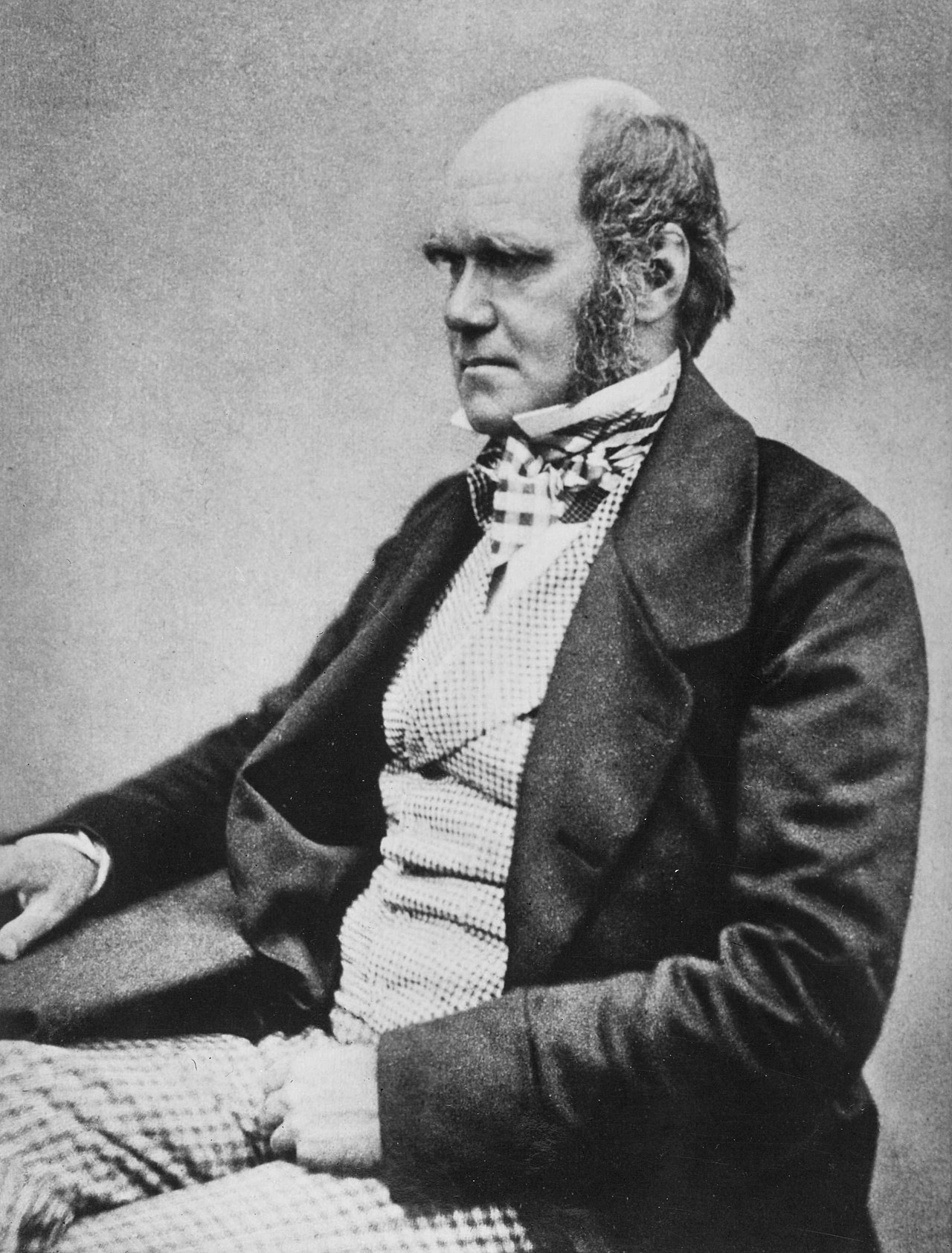
Charles Darwin famously kept a dedicated notebook specifically to record any evidence that argued against his own emerging theories. He deeply understood that confirming evidence was incredibly easy to find because his brain was highly motivated to look for it. Disconfirming evidence, however, requires deliberate, painful effort to acknowledge.
Professionally, you must force this friction. For every important strategic belief, you must ask what would need to be objectively true for you to be wrong. Ask yourself what specific evidence would finally convince you that your current path is incorrect. Find out exactly who disagrees with you and demand to hear their absolute best argument.
This leads to the Red Team approach, a concept heavily validated by research from the University of California. You must explicitly assign someone the responsibility to rigorously argue against the plan. This is not a casual devil’s advocate performance; it is genuine adversarial analysis where their sole job is to find every single reason the strategy will shatter.
Teams with an assigned dissenter identify 24% more risks and make significantly better decisions. They often feel less certain about their choices, but they end up far more accurate. In high-stakes environments, personal comfort and strategic accuracy almost always move in entirely opposite directions.
Principle 5: The 10/10/10 Rule

Business author Suzy Welch popularized a brilliantly simple temporal mechanism to bypass emotional flooding. For any highly charged decision, you must ask three questions:
- “How will I feel about this decision in 10 minutes?”
- “How will I feel about it in 10 months?”
- “How will I feel about it in 10 years?”
Most cognitive biases operate at their absolute peak strength within an immediate emotional context. By deliberately forcing a massive shift in your temporal perspective, you activate entirely different cognitive systems.
The ten-year question is uniquely powerful because it ruthlessly suppresses sunk cost thinking; a decade from now, the past investment is completely irrelevant. It obliterates in-group bias because long-term market outcomes matter far more than temporary group loyalty. It also neuters the availability heuristic, as the specific, vivid crises of today feel drastically less dominant over a decade-long horizon.
Principle 6: Blind Evaluation Where Possible


In an incredible study published in the American Economic Review in 2000, researchers Claudia Goldin and Cecilia Rouse analyzed what happened when major US orchestras implemented blind auditions. Musicians simply performed behind a physical screen so the evaluators could not see them.
The results were paradigm-shifting. The selection of female musicians immediately increased by 30% to 55%. These were the exact same musicians playing the exact same auditions. The only difference was the information available to the evaluators. Removing visual information regarding group membership completely eliminated deeply entrenched in-group and gender biases.
Applied professionally, you must aggressively strip irrelevant data from your evaluations:
- In resume screening, remove names, university affiliations, and addresses before the review process begins. This kills affinity and halo biases, forcing evaluators to focus exclusively on relevant qualifications.
- In performance evaluations, assess the actual work product before looking at the name attached to it.
- In brainstorming sessions, present ideas anonymously. This strips away authority bias and status effects, forcing the team to evaluate the raw idea entirely on its own merits.
The Complete Bias Management Framework
To stop your brain from lying to you, you must implement a structured, five-phase system. You cannot out-think bias; you must out-system it.
Phase 1: Personal Bias Audit (Week 1)
Not all biases affect everyone equally. Your personal history, professional context, and cognitive style dictate which traps you fall into most often. Review your last five significant professional decisions and rigorously ask yourself: Did a prior investment keep me locked in? Did I only seek data that supported my initial gut feeling? Did I favor someone simply because their background mirrored mine? Did the first number mentioned dictate the final budget? Count which biases appeared most frequently. These are your dominant, invisible patterns.
Phase 2: Environmental Design (Week 2)
Change the actual environment where decisions happen, not just how hard you think about them. For hiring, mandate blind resume reviews and highly structured interviews with predetermined questions scored before any group discussion occurs. For strategy, explicitly require a pre-mortem before any capital is committed and demand outside view statistics before allowing the inside view to be presented. For budgeting, institute zero-based budgeting to completely sever the anchoring effect of last year’s spend.
Phase 3: Decision Journal Implementation (Week 3)
Start small by tracking exactly one major decision per day. Write down your reasoning, your confidence level, and your bias checklist before the actual outcome is known. Review this journal monthly to spot emerging patterns rather than fixating on individual, isolated errors.
Phase 4: Team Bias Protocols (Month 2)
Extend these rigid protections to your group environment. Before any significant group decision, formally assign a rotating devil’s advocate. Demand that performance evaluations rely strictly on specific behavioral evidence rather than vague, generalized impressions that easily fall prey to the halo effect.
Phase 5: Ongoing Calibration (Monthly)
Quarterly, review your team’s decision journal to see what percentage of outcomes actually matched the confident predictions. Identify which bias patterns keep recurring and adjust your structural guardrails accordingly.
Real-World Case Studies
Case Study 1: The Acquisition That Destroyed $2 Billion
In 2016, a mid-size technology company we will call GlobalTech decided to acquire a smaller competitor for $2 billion. The board was told the strategic fit was excellent, the market timing was ideal, and the integration would be entirely seamless. Five years later, the acquisition was written off, having destroyed $1.8 billion in value.
Post-acquisition analysis revealed a devastating cascade of unchecked biases. The CEO championing the deal suffered heavily from confirmation bias, burying negative due diligence findings in appendices while highlighting only positive data. A massive halo effect blinded the team: because the target company had strong revenue growth, evaluators automatically assumed their management, culture, and tech stack were equally brilliant. They were mediocre at best. Once integration issues surfaced at the six-month mark, sunk cost fallacy took over; with $2 billion already committed, they refused to cut their losses. Finally, optimism bias convinced them integration would take 18 months, completely ignoring the outside view base rate of 3.5 years for similar transactions. Four biases operated completely unchecked. $1.8 billion vanished.
Case Study 2: The Manager Who Hired the Same Person 4 Times
Sarah, a 40-year-old VP of Engineering with twelve years of management experience, could not see her own pattern. She had hired four consecutive direct reports, rating each one as “exceptional” during the interview process. All four left within 18 months, citing a crippling lack of autonomy.
Working with an executive coach, Sarah uncovered a massive in-group bias. Having grown up in a rigid military family, she unconsciously favored candidates who expressed extreme comfort with clear hierarchy. Because they signaled alignment with her worldview, a powerful halo effect immediately inflated their perceived communication and technical skills. She then spent every interview falling prey to confirmation bias, asking questions designed to let them elaborate on their strengths while ignoring massive red flags regarding independent problem-solving.
Sarah thought she was objective. In reality, she was running the exact same biased filter four times in a row. By implementing a structured interview protocol, blind initial resume reviews, and rigorous exit interview analyses, she fundamentally broke the cycle. Of her next six hires under the new system, five remained highly successful in their roles over two years later. As Sarah noted, experience hadn’t protected her from bias; it simply gave her twelve years of practice at being confidently wrong in the exact same direction.
Case Study 3: The Strategy Defended Long After It Should Have Been Abandoned
Marcus, a Chief Strategy Officer at a major retail brand, championed a $30 million digital transformation strategy in 2019. Eighteen months in, the data was catastrophic: customer adoption was only 12% of projections, and the tech platform was hopelessly complex. Instead of pivoting, Marcus presented heavily revised projections promising success by Year 3, replaced dissenting team members, and poured more money in to double down.
He was drowning in sunk cost fallacy, terrified of writing off the initial $20 million. His ego and loss aversion triggered massive motivated reasoning; abandoning the strategy felt like an existential threat to his identity. By Year 3, the board intervened, the strategy was entirely scrapped, and Marcus was forced out.
If the company had implemented pre-committed decision rules before the emotional investment began, such as stating, “If adoption is below X% by Month 18, we will mandate a formal, external strategy review”, they would have removed the biased, in-the-moment choice to continue. When the person evaluating a failing strategy is the exact same person whose entire reputation depends on its success, you do not have evaluation. You have desperate defense.
Reality & The Brutal Self-Honesty Test

Your professional judgment is significantly less reliable than you deeply believe it is. Just as thousands of busy commuters in a Washington DC subway completely ignored the virtuoso Joshua Bell playing breathtaking concertos on a $3.5 million Stradivarius simply because their brains categorized him as a common street busker, your brain constantly filters out brilliant data because the immediate context doesn’t fit its rigid expectations.
Test yourself with brutal honesty:
- “In the last year, have I changed my mind on a significant professional belief based strictly on new evidence?” If the answer is rarely or never, confirmation bias is running your life.
- “When a major project I championed underperformed, what did I attribute it to?” If you immediately point to external factors, you are using the fundamental attribution error to protect your fragile self-image.
- “Do I find it infinitely easier to see massive flaws in arguments that contradict my views than in arguments that support them?” If yes, motivated reasoning is actively weaponizing your intelligence.
- “Have I continued investing time or capital into a failing strategy primarily because of what I’ve already put in?” If yes, the sunk cost fallacy has successfully hijacked your logic.
- “Do the people I promote and praise tend to look, sound, and think exactly like me?” If yes, in-group bias is quietly destroying your team’s cognitive diversity.
- “When I make a confident prediction that turns out completely wrong, do I remember making it with the exact level of certainty I actually did?” If no, hindsight bias is actively rewriting the history of your own errors.
- “Do I keep any written record of my major professional predictions and their ultimate outcomes?” If no, you have absolutely zero accurate feedback mechanisms regarding your own decision quality.
The hardest admission any professional must make is recognizing that they have made massive, confident decisions that turned out completely wrong, yet entirely failed to change their underlying process. We tell ourselves that experience reduces bias, when in reality, experience without rigid calibration merely makes us confidently biased.
Conclusion: Build the Systems That Catch the Lies
Your brain is lying to you every single morning. It isn’t doing it maliciously; it is doing it automatically. Long before you open your inbox, ancient cognitive shortcuts activate that will fundamentally shape every high-stakes decision you make for the rest of the day.
The research is unassailable. Experienced professionals completely miss 72% of the cognitive biases destroying their work, and senior executives perform worse than junior ones because intelligence and tenure simply generate highly sophisticated rationalizations for terrible choices.
You absolutely cannot think your way out of cognitive bias. You cannot simply try harder, focus more, or be smarter. Bias operates entirely below the threshold of your conscious awareness. The ultimate solution is never superior thinking; the solution is superior systems.
Checklists. Pre-mortems. Decision journals. Blind evaluations. Red teams. Pre-committed exit criteria. None of these structural guardrails feel nearly as satisfying as trusting your gut. But all of them produce vastly superior decisions than trusting your gut ever will. Stop romanticizing your intuition. Build the systems that catch the lies.
Sources
- 1.Confirmation Bias: A Ubiquitous Phenomenon in Many Guises
Review of General Psychology (Raymond Nickerson)•1998
- 2.Unskilled and Unaware of It: How Difficulties in Recognizing One's Own Incompetence Lead to Inflated Self-Assessments
Journal of Personality and Social Psychology (David Dunning & Justin Kruger)•1999
- 3.Judgment under Uncertainty: Heuristics and Biases
Science (Amos Tversky & Daniel Kahneman)•1974
- 4.Orchestrating Impartiality: The Impact of "Blind" Auditions on Female Musicians
American Economic Review (Claudia Goldin & Cecilia Rouse)•2000
- 5.The Case for Behavioral Strategy: McKinsey Global Survey of 1,048 Business Decisions
McKinsey & Company•2010

Ankit Kumar
I'm Ankit Kumar, founder of Science Petal. I am a dedicated science communicator and independent researcher passionate about synthesizing complex academic literature, cognitive psychology, and behavioral science into clear, actionable frameworks to help curious minds understand human behavior.


Recommendation Articles
See All
The Power Game: Understanding Influence Before It’s Used Against You

The Feeling Intelligence: Why EQ Predicts Success Better Than IQ

Bias Blind Spot: Why Smart People Miss Their Own Bias, and How to Change Your Mind

Are Networking Events Worth Your Time? What the Research Actually Says

The Hidden Psychology of Money: Why Smart People Make Irrational Financial Choices
